Guide
Measuring sustainability can quickly become a data exercise. Energy use goes into one spreadsheet, waste into another, carbon emissions into a third, and someone starts asking whether the business should also be tracking water, packaging, suppliers, staff, biodiversity or social impact.
The problem is not usually a shortage of things you could measure. It is deciding which measures will actually tell you something useful about your business.
There are plenty of reasons why you might need that information. A customer may ask for emissions data, a tender might require evidence of your environmental performance, increasing energy or waste costs might prompt a closer look at resource use, or you might simply want to know whether the sustainability initiatives you have already introduced are working.
Whatever prompted the question, useful sustainability measurement should help you understand three things: where your business is now, whether its performance is changing and whether the actions you are taking are producing the result you intended.
You do not need to measure everything to do that. The challenge is choosing the information that will help you understand your current position and make better decisions about what should happen next.
There is no single set of sustainability measures that is right for every business. A manufacturer with energy-intensive production, significant material use and a complex supply chain will need different information from a professional services firm with a small office and a largely remote workforce.
Start by considering your activities, products, services and supply chain. What are the most significant sustainability impacts associated with them? What are customers, regulators, employees and other important stakeholders asking about? Where does the business have the greatest exposure, or the greatest opportunity to improve?
This follows the same basic principle used in more formal sustainability materiality assessments: focus attention on the issues that are significant enough to matter. For a smaller business, the exercise does not necessarily need to become complicated.
You might identify greenhouse gas emissions, energy use, packaging, waste, employee retention and supplier standards as priorities. Another business may arrive at a completely different list.
What matters is that the measures are relevant to your business, rather than selected simply because they appear on somebody else's sustainability dashboard.
One of the easiest ways to overestimate sustainability progress is to measure activity rather than the result of that activity.
For example, a business may provide sustainability training to 50 employees. The number of people trained is useful information: it confirms that the training happened and shows how many people it reached. But it does not tell you whether employees understood it, changed a decision or improved their performance afterwards.
The same distinction applies to many sustainability initiatives. Installing new recycling bins is an activity. The proportion of waste being correctly separated tells you more about performance, while a reduction in the amount of waste being sent for disposal gets closer to the environmental outcome you were trying to achieve.
You will often need more than one type of measure. Activity measures help you understand what has been delivered. Performance measures show whether something is changing, while outcome measures help you understand whether that change is producing a meaningful result.
Knowing the difference makes it much easier to decide what information is actually worth collecting.
A number on its own can tell you surprisingly little. If your business used 180,000 kWh of electricity last year, is that good or bad?
The answer depends on what you are comparing it with.
A baseline gives the number context. It establishes a starting point against which future performance can be compared. Once you have a reliable baseline, you can begin to see whether emissions, energy use, waste, water consumption or another important measure are moving in the right direction.
Where the level of business activity changes significantly, it can also be useful to consider an intensity measure alongside the absolute figure. A manufacturer, for example, might track energy use per tonne of product as well as its total energy consumption.
This can help distinguish genuine improvements in efficiency from changes caused simply by producing more or less. Both figures may matter: a business can become more efficient per unit while its total environmental impact continues to increase.
Before adding another sustainability indicator, it is worth asking what you are going to do with it.
A useful measure should normally relate to an issue that matters, be capable of being measured reasonably consistently and have somebody who knows where the information comes from. Most importantly, the result should tell you something that could influence a decision.
If nobody knows who owns the data, how it is calculated or what would change because of the result, it is likely to become reporting overhead rather than useful business information.
For smaller businesses in particular, a short set of well-chosen measures can be much more useful than a large sustainability dashboard. The objective is to understand the business well enough to recognise what deserves attention, not to collect the largest possible quantity of data.
A company carbon footprint is a good example of sustainability measurement because it brings information from different parts of the business together and turns it into a consistent baseline.
Activities such as fuel and electricity use, business travel, waste, purchased goods and other relevant sources can all contribute to a company's greenhouse gas emissions. Carbon footprinting converts those different activities into a common measure, allowing the business to understand not only its overall emissions but also where the most significant sources are.
That information can help identify areas worth investigating further, provide a baseline for future comparison and support requests for emissions information from customers, parent companies or procurement processes.
It also illustrates an important principle that applies well beyond carbon. Measurement becomes most useful when it helps you move from a collection of individual data points to a clearer understanding of what is happening in the business.
We will look more closely at how carbon footprints work in the next article in this series.
Many smaller businesses hesitate to establish a sustainability baseline because their first dataset is imperfect. Supplier information may be missing, waste data may be inconsistent, travel records may sit in different systems and historical information may not exist at all.
These are genuine limitations, but they do not necessarily mean you should wait.
Start with the best reliable information available. Record any significant estimates and assumptions, be clear about the gaps in the data and consider whether any of those gaps could materially affect your understanding of the result.
You can then improve the information over time. A first baseline with clearly understood limitations is often considerably more useful than having no baseline at all.
Consistency is important too. If the method changes substantially every time you calculate a measure, it becomes difficult to tell whether the business has changed or simply the calculation has. Aim for a method that is reliable enough to repeat and transparent enough that somebody else can understand how the result was produced.
If you are starting from scratch, keep the first version manageable.
If a measure is never discussed, never helps you understand performance and never influences a decision, it is worth asking whether you still need to collect it.
Sustainability measurement does not need to begin with an elaborate reporting system. It begins with developing a reliable picture of where your business stands today.
Start with the issues that matter, establish a baseline and be clear about what each measure is telling you. You can then improve the information as your data and sustainability programme develop.
For many businesses, a company carbon footprint is one of the most useful places to start. It can establish a structured baseline for an important environmental impact, identify the main sources of emissions and provide information that customers and procurement teams increasingly ask businesses to provide.
If carbon is one of the areas your business needs to understand, GB Sustainability's Carbon Footprint Assessment can help you establish a Scope 1, Scope 2 and relevant Scope 3 baseline, understand the main sources of your emissions and provide a reliable foundation for future measurement and reduction decisions.
If you are not sure what your business should be measuring, or whether a carbon footprint is the right place to start, we can talk through your current position and help you identify the most useful next step.
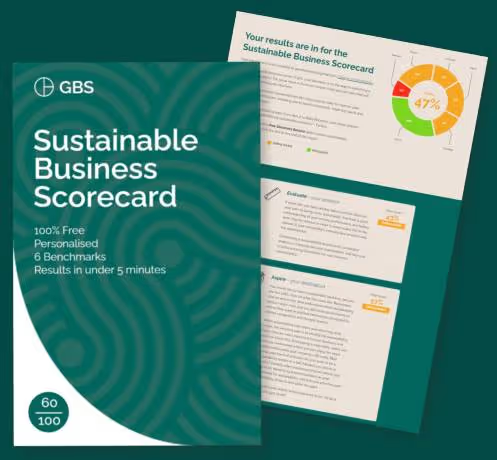
Discover your sustainability strengths and weaknesses with the Sustainable Business Scorecard.
Get My Sustainability ScoreTool
The United Nations Sustainable Development Goals, or SDGs, provide a robust framework for businesses large and small to formulate their strategy.
Guide
Learn what Net Zero means for SMEs, why it matters, and how to create a practical Net Zero roadmap. A simple guide for small businesses.
Tool
With the price for energy and resources increasing, the circular economy can help reduce costs and improve environmental performance. Here we provide some tools for businesses keen to know more about circular economy principles.
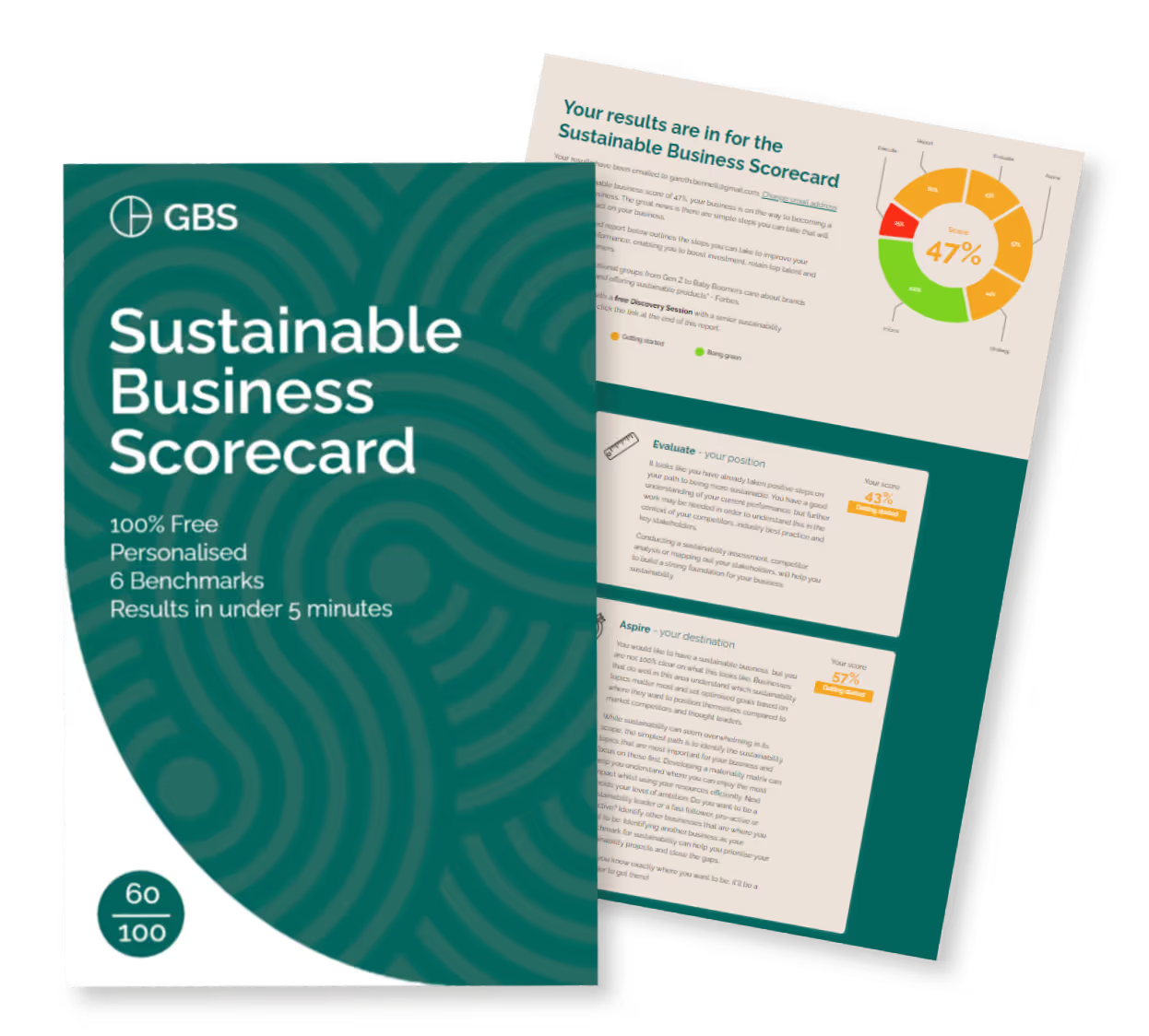
Our Sustainability Scorecard helps businesses quickly assess their current sustainability performance across key ESG topics.
In less than five minutes, you'll receive:

A sustainability rating
Practical recommendations
Identification of key strengths
A clearer sustainability roadmap
Areas for improvement

Instant results. No credit card required.


