Article
Sustainability reporting can sound like an administrative task: another questionnaire, another customer request or another document to prepare. But for many businesses, the commercial value appears long before a formal sustainability report is published.
It appears when a customer asks for evidence and you can respond quickly. When a tender asks for a Carbon Reduction Plan and the data is ready. When a supplier assessment asks how your emissions were calculated and you can explain the method. Or when a buyer wants proof of a sustainability claim and the evidence is already controlled, current and easy to find.
That distinction matters commercially. In 2026, research by The Marketing Pod found that 98% of respondents had missed a business opportunity because of a lack of proven sustainability credentials. Reuters reported the same research as showing organisations had been excluded from new contract opportunities or lost business because they could not back up their sustainability credentials.
While The Marketing Pod research focused on directors at large UK organisations, the underlying issue is relevant to smaller businesses too. ACCA notes that sustainability information is increasingly requested through value chains and can help SMEs build competitive advantage.
The practical point is simple: when customers or procurement teams ask for sustainability credentials, being able to substantiate them matters. ACCA's SME sustainability reporting guide also provides a practical reporting cycle for businesses responding to those information demands.
When people hear “sustainability reporting”, it is easy to picture the end product: a glossy annual report, a disclosure to a regulator or a completed customer questionnaire.
The useful work starts earlier. Before you can report anything credibly, you need to know what is being asked, which part of the business it relates to, who owns the information, how the data was produced and what evidence supports the answer.
For a small business, that might mean something as straightforward as knowing where the latest electricity data is stored, who approved the environmental policy and whether the published Carbon Reduction Plan is still current. For a more complex request, it might mean documenting the organisational boundary for a carbon footprint, explaining which Scope 3 categories were included or showing how a supplier risk assessment was carried out.
The report, form or submission is the part people see. Most of the value lies beneath it: the data, evidence, ownership, methods and controls that make the information credible and reusable.
A sustainability claim can support marketing. An evidence-backed sustainability answer can influence whether a business is able to stay in a buying process.
That is a more demanding standard. A customer may not simply want to hear that you are reducing emissions. They may ask for your latest footprint, the reporting period, the methodology used, your reduction target and evidence that somebody in the business has approved it.
Public procurement makes the point particularly clear. NHS Evergreen, for example, is completed as an assessment, but its answers depend on underlying evidence such as emissions reporting, a Carbon Reduction Plan, governance and, at higher maturity levels, stronger target and modern-slavery evidence. The commercial capability is being able to produce evidence that supports each answer when it is needed.
Good reporting turns sustainability activity into evidence that another organisation can assess, compare and use in a commercial decision.
The frustrating part of sustainability reporting is that different customers often ask similar questions in slightly different ways. One buyer asks for Scope 1 and 2 emissions. Another asks for a Carbon Reduction Plan. A third sends an sustainability questionnaire. A certification body asks for the policy, target and supporting evidence separately.
If every request starts from a blank page, the burden grows quickly. The finance team searches for energy invoices again. Someone checks which version of a policy is current. The carbon calculations are copied into another spreadsheet. Previous answers are reused without anyone being certain whether they still apply.
A better reporting system collects the underlying information once and controls it properly. The same approved emissions data can then support a carbon footprint, a tender response, a Carbon Reduction Plan and parts of a supplier assessment. The same policy can be reused while its owner, approval date and review date remain clear.
The frameworks are not identical, but the underlying evidence often overlaps. The business can stop treating every request as a completely new information problem.
Another benefit of good reporting is that it exposes weaknesses while there is still time to fix them.
Imagine a commercial manager preparing a tender. The business has an environmental policy, but the version on the website expired six months ago. The carbon footprint exists, but nobody can explain why one Scope 3 category was excluded. A modern-slavery statement has been drafted, but it was never approved. Or the evidence sits in several people's inboxes and the colleague who prepared last year's submission has left.
None of those problems necessarily means the business is performing badly on sustainability. They are evidence and control problems. A reporting process gives you a chance to find them internally rather than discovering them when a buyer is waiting for an answer.
That is where reporting begins to support commercial readiness. You are not only describing what happened. You are making the business better prepared to demonstrate it when a customer or procurement team asks.
You do not need to begin by designing a sustainability report. Start by testing whether the information behind your reporting is usable.
1. Requirement: Do you know exactly what is being asked, who is asking, which entity it relates to and the reporting period?
2. Owner: Is someone clearly responsible for the information and any approval needed?
3. Data: Do you have the underlying information in a usable and sufficiently complete form?
4. Evidence: Can you show where the information came from and substantiate the answer or claim?
5. Method: Are the definitions, boundaries, calculations and important assumptions documented?
6. Review: Has the information been checked at a level proportionate to the decision or claim?
7. Reuse: Can the controlled evidence support another questionnaire, tender or disclosure without being recreated?
If several of those questions are difficult to answer, the priority is probably not a more polished report. It is strengthening the evidence system behind it.
For a smaller business, “reporting system” can sound more complicated than it needs to be. It does not have to mean specialist software, a large sustainability team or a library of policies.
A proportionate starting point might be a simple register of recurring customer requirements, named owners for the main data points, one controlled evidence folder and documented methods for the figures you report most often. The aim is not to create administration for its own sake. It is to make the information reliable enough to use and easy enough to find.
The level of control should rise with the importance of the claim. A figure going into a major tender or an externally assured disclosure needs more scrutiny than an internal progress update. What matters is that the evidence, method and review are appropriate to the decision being made.
The commercial value of sustainability reporting is not confined to the report itself. It can sit in the opportunities the business is better prepared to compete for, retain or respond to.
It is in knowing what customers are likely to ask. It is in having current evidence rather than starting a search when the deadline arrives. It is in being able to explain how a number was calculated, where a claim came from and what remains uncertain. And it is in reusing good evidence instead of rebuilding the same answer repeatedly.
That does not guarantee a contract. Sustainability is only one part of a buying decision, and the requirements vary between customers and sectors. But when sustainability credentials form part of supplier selection or procurement, being able to substantiate them can help a business remain eligible, answer buyer questions with confidence and avoid losing opportunities simply because the evidence is not ready.
The survey does not tell us the financial value of better reporting for an individual business. It does not provide contract values, the number of opportunities each organisation pursued or how often sustainability was decisive. So there is no defensible universal return-on-investment figure to quote.
But you can estimate the value at risk to your business yourself. Start with the commercial opportunities where sustainability credentials are relevant. Then record the contract value or contribution, whether sustainability evidence is a pass/fail requirement or a scored factor, and whether the business currently has the evidence needed to respond.
A simple way to think about it is:
Value at risk = Relevant opportunities × Value of those opportunities × % Exposed to a sustainability-evidence gap.
That can provide a useful business estimate of the commercial exposure created by an evidence gap. It is not a prediction of revenue or a guaranteed return from reporting.
It turns reporting from a vague overhead into a commercial question: what opportunities are we less prepared to compete for because our evidence is incomplete, difficult to substantiate or too slow to assemble?
GB Sustainability helps small businesses work out what sustainability information their customers and procurement routes actually require, organise the evidence they already have and close the gaps that matter.
That can include carbon footprints and Carbon Reduction Plans, supplier assessments such as NHS Evergreen and EcoVadis, packaging reporting, modern-slavery evidence, customer questionnaires and wider sustainability reporting support.
If a customer or tender is asking you for sustainability information and you are not sure whether your evidence is ready, talk to GB Sustainability and we can help you identify the most practical next step.
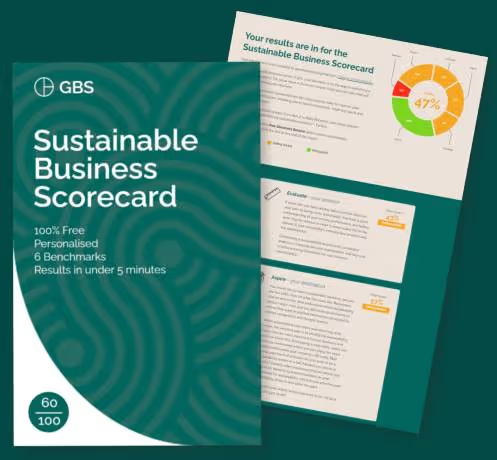
Discover your sustainability strengths and weaknesses with the Sustainable Business Scorecard.
Get My Sustainability ScoreGuide
Stakeholders are vital to the success of any business. Find out how to identify and prioritise them with our easy how-to guide.
Article
Received No Level Awarded in the NHS Evergreen Assessment? It may be an evidence gap, an Atamis issue or an unexpected system result. Here’s how to work out what needs attention.
Article
Sustainability is not just for large international corporations. Small businesses have a big impact. Here's how to make your impact a positive one.
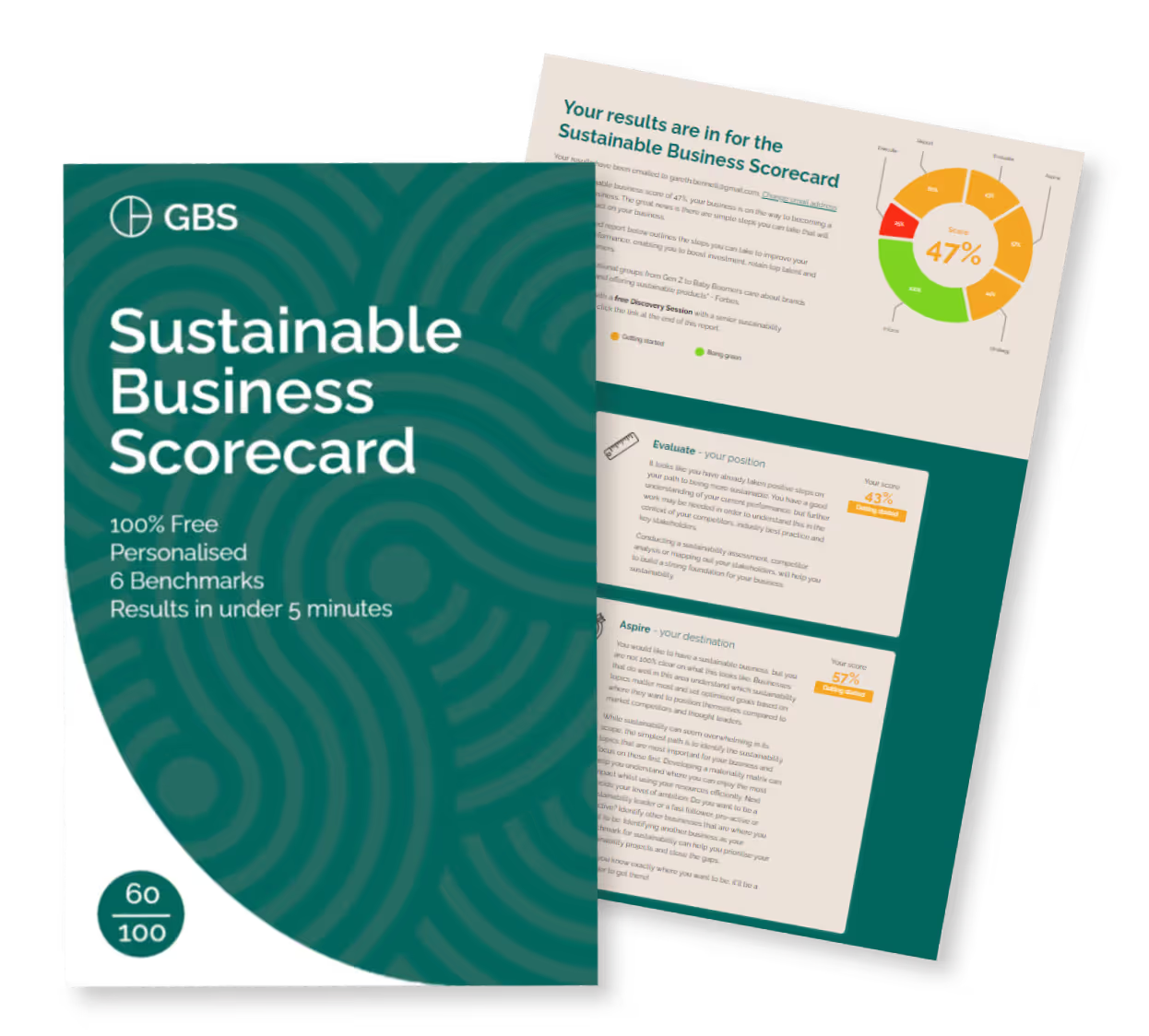
Our Sustainability Scorecard helps businesses quickly assess their current sustainability performance across key ESG topics.
In less than five minutes, you'll receive:

A sustainability rating
Practical recommendations
Identification of key strengths
A clearer sustainability roadmap
Areas for improvement

Instant results. No credit card required.


